As a way to highlight how false memories and the Mandela Effect are integrated into the real world, we wanted to know how people in the medical field are equipped to deal with ranging memory complications. So, we went to the largest rehabilitation centres in British Columbia, and talked to clinical nurse educator on how she prepares her staff on recollection impairments in their brain injury patients.
Audio:
*Interviewee: K. Marquez, RN and Clinical Nurse Educator — Vancouver Coastal Health vch.ca/
Transcript:
FE: So if we could start by you introducing your career profession and how you got into it, specifically in this ward.
KM: My name is Karen Marquez. I’ve been a registered nurse for 14 years, and I’m currently the clinical nurse educator for GF Strong Rehabilitation Centre for the entire unit. So, we have three units here: spinal cord injury, acute brain injury and NMS.
FE: And then why did you choose pursue nursing?
KM: Oh, nursing! I just have the passion for nursing. The healthcare field is in my family. My dad is a doctor and my mom was a nurse as well, so I guess early on I was pushed into the field of healthcare. Nursing for me is pretty big, because there are a lot of paths you can go to. There are so many different areas you can excel in and develop your skills in every area possible. Rehab wise, I like rehab nursing because we see people that come in here and they have the worst fate in life, having brain injuries, having spinal cord injuries. Going through rehab will help them get back to where they were, and for me I find that very inspiring.

FE: When people think of major memory impairments, Alzheimer’s and dementia are the most widely known. What does it look like to have these diseases?
KM: I can talk about when I was working long-term care, where we had a lot of patients with Alzheimer’s and dementia. Alzheimer’s and dementia are mostly memory problem-related. You could see they would have trouble remembering people’s names or what they had for breakfast. They would just ask you like oh, did I have my breakfast?, but they already had breakfast. So, for Alzheimer’s and dementia, it’s setting them back to reality, and making sure hey, you already had breakfast!, and saying what they had. It’s more repetition for them.
KM: For rehab, a lot of our patients here in the ABI unit suffered a massive stroke that lead to a brain injury, or a traumatic accident or experience. Whether it be a vehicle accident or something like that. What I find with regards to their memory problems is that a lot of them don’t remember what happened during the accident. They would just tell you oh, the last thing I remembered I was just in the street!. So, they don’t know if they’ve been hit or what happened when they had that stroke or brain injury. For us [nurses], it’s all about the facts we can give them so they know what really happened to them.

FE: Do the memory issues you see arise in the brain injury ward primarily affect older populations, or can it affect youth too?
KM: Well, I feel we have handed a lot of people from different age groups. We have adolescent people, people in school– like extremes of age really. We have had really young people, as well as really old people. But how we treat them as the same. So it’s like repetition, repetition, repetition!
FE: Do you use any ques like photos, scrapbooks or any mementos from home to use to bring back those memories?
KM: Oh, for sure! We encourage their families to bring a photobook, so that they can remember their family members. That is because a lot of them would be like oh, who is that?, and they would be say oh, I don’t know!. Then, we would point out that is your sister [for example]. It’s just giving them that sense of a visual perception on who you’re talking about, and it actually helps them. And one other thing that we’re doing is [incorporating] flashcards, actually. A lot of our patients also forget a sense of safety, so they’re safety inhibited as we call it.
KM: They don’t know how to be safe, so we usually give them flashcards to be like make sure you call so you don’t fall off your chair!. That’s because some of them have mobility issues as well. It’s just making sure that they know, because if they see it then they would know to call. But sometimes if they don’t see the sign, they would just stand up just because they forgot they need help.
FE: As a CNE, are they any protocols your nurses are supposed to follow if a patient is experiencing memory impairment? Is there a particular way of reporting this to other colleagues?
KM: For nursing, we always do report handovers if there’s anything that happened in particular to a patient that we need to be monitoring. For example, this particular patient we found very confused today. Like he doesn’t remember the date or something like that. So, it’s handed over to the next shift via written report.

FE: In the brain injury ward, is it reliant on any machinery that helps patients’ maintain their memories?
KM: From what I know, a lot of them do the EEG. I think for EEG, it just tracks the brain waves and sees if there’s any changes to a normal behaviour. That’s just it mostly. For us, it’s just based on facts. We just tell them what the facts are, and just repetition. There’s not a whole lot of gadgets.
FE: If a patient were to be experiencing a Mandela Effect, and sure they’re in the right and have become aggravated because of it, is there a protocol you have for RN’s to diffuse the situation?
KM: Oh, for sure! Just from my previous example of somebody that thinks they have not had breakfast yet, they can flare up because they think they haven’t had breakfast, but they actually did. So for us nurses, we always got to be calm. That’s the first thing we got to be. Then, we got to think critically, like how do I help this person?
KM: I know he is having memory issues, so it’s mostly just being calm and getting the person to calm down, because you don’t want to aggravate the person more. But it’s not like your going to tell them that — force them like no, you’ve had your breakfast you don’t remember!. It’s mostly just okay, calm down let’s talk this over; look at the time, it’s already maybe 10 o’clock and you usually have breakfast around eight o’clock, so you must have had your breakfast already.

KM: It’s just more like that. Just being calm, and just telling the person it’s okay. I know it’s difficult for some people to say just relax, but especially with brain injury people, they don’t know how to relax right away. So you got to make sure the environment around them is calm as well, and there’s no outside stimulation that can stimulate and aggravate them more.
FE: Have you had patients that don’t have a background or history with brain injuries experience Mandela Effects or memory impairment?
KM: Yes, for sure! Maybe it’s the hospital setting in itself, because some of them get cabin fever where they’re in one place, and forget what it’s like outside. They get restless, but sometimes they are not allowed to go outside. But memory problem wise, it’s just a matter of — sometimes the basic thing they forget is the day it is today, or something like that.
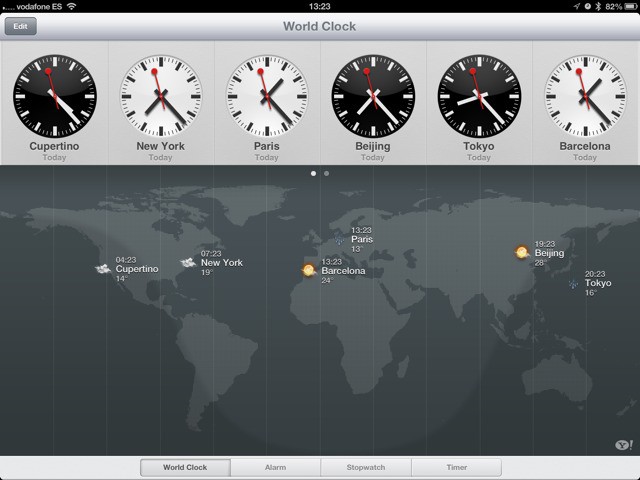
KM: It’s just up to the nurses to intervene right away and make sure they’ve got a calendar right there; make sure they’ve got a clock, and know how to read a clock. If not, then we switch to the — but now we are offering them the iPad, so it’s digital, right? So you don’t need to know how to read an analog clock. That I think rally makes a difference for them for sure.
FE: Do these memory concurrently happen quite often, or is it just a one time thing that occurs maybe once a week? How often do you see these arise in the ward?
KM: I don’t keep track, but I’m sure it’s often. It’s more often than I think it is, and I think that’s also a memory problem! Yeah, definitely more often than I think it actually is. I guess our brain is not as conscious to it. If we open our brains up and just think hard, I think you’ll be like oh yeah!. That is what you call now a memory gap, [where] you thought of something that didn’t actually happen.
FE: How often are the memory impairment case you see are linked to physical accidents, rather than continuing diseases like Alzheimer’s and dementia?
KM: This floor in particular is acute brain injury, so I would say 80-percent of them are accidents. Either vehicle accidents; or snowboarding accidents; or skiing accidents or something like that. Sometimes the memory loss starts during the accident per say, because they don’t remember what happened.
FE: What are the key details to gather from a victim of an accident in terms of what they can remember?
KM: The first thing [paramedics] ask if is the person is alert; or if the person is oriented. Usually it’s the three: day, name and place. So, if they pass that, then they’re fully conscious. But some people just know their name, or they don’t know the date; they don’t know where they are. That’s an impairment right there! And usually it’s documented by the paramedic and transferred on to the hospital, and then we see it.

KM: So everyday when we start our shift, we ask them [the three signs of orientation] to monitor if there are any changes. Like maybe yesterday, [a patient] got three-out-of-three, but today it’s only two-out-of-three. Then we go to the next day and [their] back to the three-out-of-three, so maybe that’s just a fluke. But if it continues to go different directions that what we want to, that’s when we’ll be like [they’ll] need more intervention, because he’s having brain problems.
FE: So what’s the road to a diagnosis from there?
KM: The doctors will look at the medications, because medications have side effects or trigger memory loss as well — not memory loss per say, but it changes the hormones in the brain that makes you think. So some antipsychotics and anti-seizure medications will have brain effects that can lead to relapse memory.
KM: There’s no diagnosis per say for memory loss. It’s just something that happens, and something that you need to monitor so it’s not getting worse. Because when it gets worse, maybe there’s a bleed in the brain that need to be surgically operated on. Or, that’s just where the level of brain injury is; that they just cannot remember, and it’s up to you to intervene and make sure their safe and go on in life even with the deficients they have.
FE: What medias do you use to go about your lessons with RN’s on memory-related issues and other health topics?
KM: I feel for educating nurses, it’s more about making it fun and interactive. So, I find posting videos about what is relevant in their practice is more — they actually respond more to videos, rather than giving them a handout to read. And including movies as well, because now I am just showing them short documentaries. I’m actually going to post something for spinal cord injuries, about a guy who had an accident and memory problem. I find that inspiring, and hopefully the nurses find it inspiring as well!
Follow our social media platforms below to stay informed on our latest updates!
 SWC Podcasts Presents